Redesigning the way Australian farmers sell their grain
A full redesign of the onboarding and offer creation flow for Clear Grain Exchange, Australia's largest independent grain trading platform, to drive grower activation and listings volume.
Clear Grain Exchange (CGX)
Freelance Product Designer, end-to-end
1 year
AgriTech / Grain Trading
Figma, FigJam, Dovetail
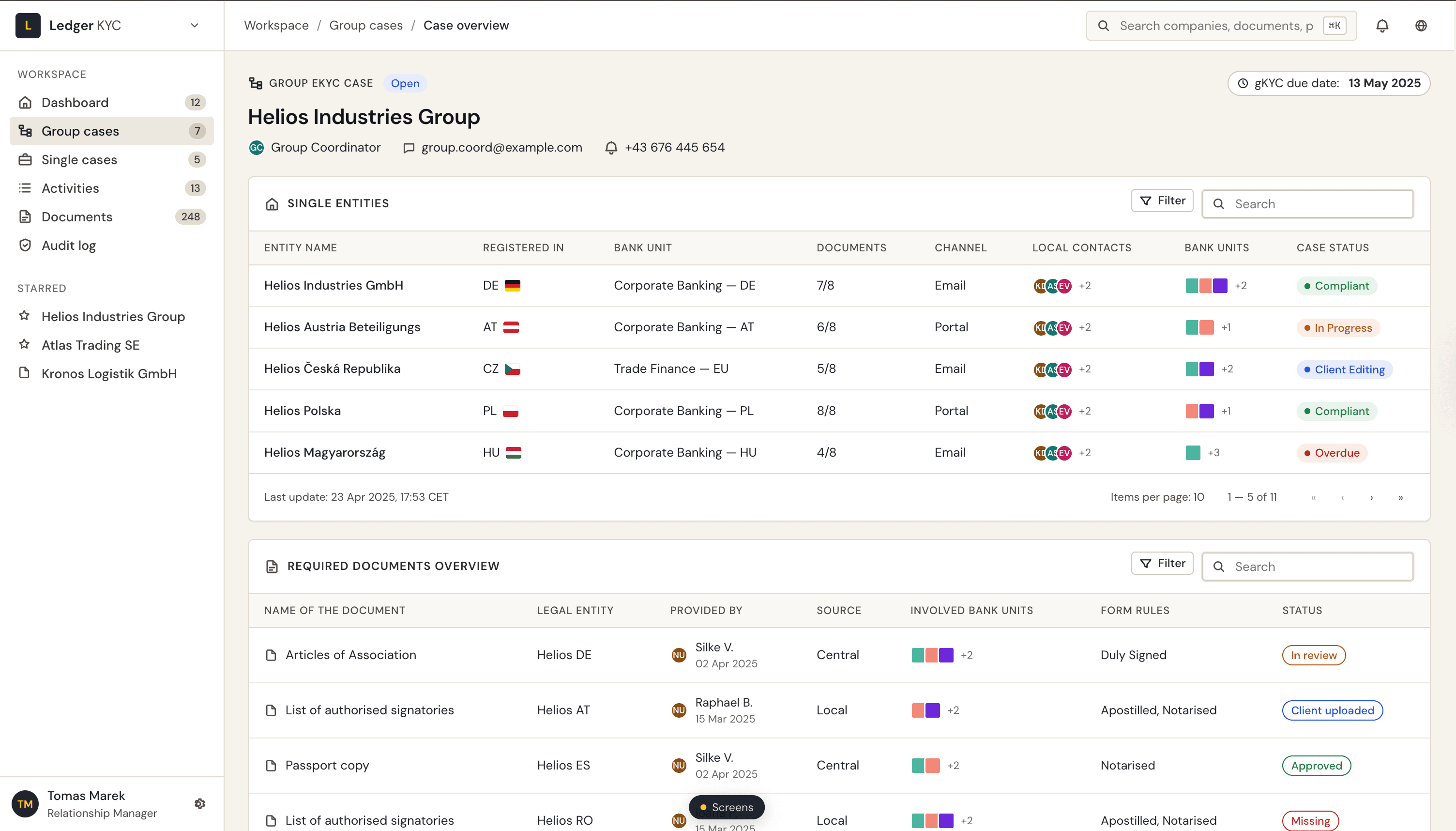
Clear Grain Exchange is Australia's largest independent grain trading platform. It connects thousands of growers with buyers, agents, and storage providers. Over 9.3 billion dollars in grain has been traded through it.
Despite the scale, one number kept coming back from the team: growers were starting the sign-up and offer creation process and not finishing it.
The flows were outdated. They were built around the platform's internal logic, not around the mental model of a farmer trying to sell grain for the first time.
A grower's mental model is simple. I have grain. I want to know what it's worth. I want to sell it safely. The existing flow didn't reflect that at all.
$9.3B
in grain securely settled through CGX. Growth was limited by drop-off in grower activation.
4
distinct user types on the platform. Growers, Buyers, Agents, and Warehouses, each with different flows and needs.
45+
prioritised UX improvements identified across the audit. Ranging from quick wins to structural redesigns.
Freelance lead designer on the Grower experience, start to finish.
I ran the discovery workshop with internal stakeholders, audited the existing platform end to end, conducted the user research (survey plus interviews), synthesized 45+ prioritised improvements into a phased roadmap, designed the new information architecture, delivered hi-fi prototypes for onboarding, the Add Grain flow, the Offer Creation flow, and the dashboard redesign, and supported handoff to engineering.
The platform has four user types: Growers, Buyers, Agents, Warehouses. I focused the redesign on Growers because that's where the highest drop-off was and where the mental model mismatch was most severe.

What the research revealed
Four parallel research streams
I ran four parallel research streams to build a complete picture of where the experience was breaking down.
A stakeholder workshop mapped company goals, strategic priorities, and the commercial constraints I needed to design within. This gave me alignment on the Grower flow as the primary redesign focus before I started.
A full platform audit documented every friction point in the existing Seller experience. A survey of 10 users gathered quantitative data. One-to-one interviews with 5 users went deeper into emotional needs and mental models.
The insight that reframed the project
First-time growers weren't resistant to the platform. They were unprepared.
In interviews, one pattern kept coming back: people needed to understand the platform and the grain market before they felt ready to list. They weren't dropping off because the form was broken. They were dropping off because they weren't confident they knew what they were doing.
That reframing changed the brief. The question wasn't 'how do we get more users through the flow.' It was 'how do we get users ready to complete the flow.'
That insight led directly to the Educational Hub, a pre-onboarding resource with platform tutorials, market insights, and step-by-step guides. Not a feature tour. A preparation space.
Four user types, one primary focus
The platform serves Growers, Buyers, Agents, and Warehouses. Each has distinct workflows and mental models.
Research made it clear that the Grower was the user type with the highest drop-off and the deepest mental model mismatch. Growers ranged from tech-savvy younger farmers to older users with limited digital experience, but they shared a common set of needs: understand the value of their grain, trust the platform, list without friction, stay in control.
The redesign scoped to Growers first. Other user types were planned for subsequent phases.
Key choices that shaped the outcome
Designed for the user's mental model, not the platform's data model
The old flow asked for organisation, season, location, and grain grade simultaneously, in the order the database wanted them. The user had to understand the platform's internal structure before they could start.
The new flow asks one thing at a time, in the order a farmer would think about it. Where is the grain. What grain is it. How much. What do I want for it.
Each step carries context forward, so nothing is asked twice and no field becomes editable until the previous one has a valid answer.
Surfaced market intelligence inline, not in a separate screen
Growers needed to know what their grain was worth. The old flow made them leave the offer creation screen, navigate to market data, then come back. Most users didn't come back.
The redesigned Create Offer screen shows the current CGX bid, the most recent trade, the best published bid, and buyer activity counts directly next to the price input field.
The information is there at the moment the decision is being made.
Made the Educational Hub optional, not mandatory
The research insight was strong: first-time growers needed to prepare before listing. A weaker version of this would have been a mandatory tutorial wizard at the start of onboarding.
I argued against that. Mandatory tutorials get skipped or resented. Users who were ready to list would feel talked down to.
The Educational Hub became a visible, optional pre-onboarding experience. Users who wanted extra support accessed it without disrupting the main flow.
45% of new users opened it in the first month, averaging 7 minutes per session. A mandatory tutorial with that retention would be a rare thing.
How we built it
The redesign spans five core parts of the grower journey.
Pillar 1: Registration, stripped to essentials
The new registration flow collects only what's needed to create the account: role, NGR number, basic farm information, notification preferences.
Everything optional was moved to a profile completeness prompt that appears later, after the user has seen the value of the platform.
Pillar 2: First entry, guided but not forced
New users land on a welcome screen with the Educational Hub clearly visible as an optional resource. A guided dashboard tour highlights Add Grain, Market Insights, and Notifications.
The user is shown what the platform can do, without being walked through it step by step.
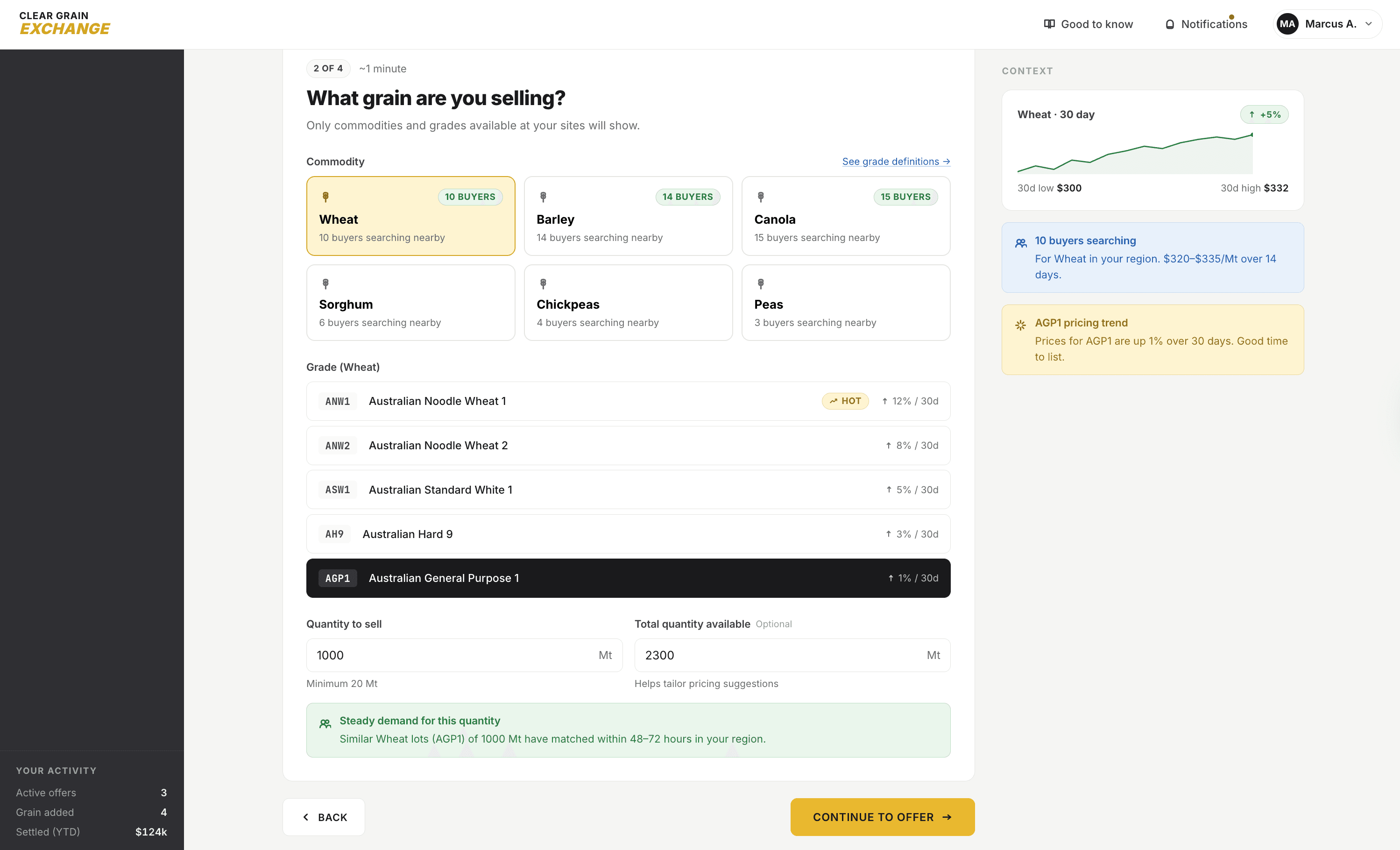
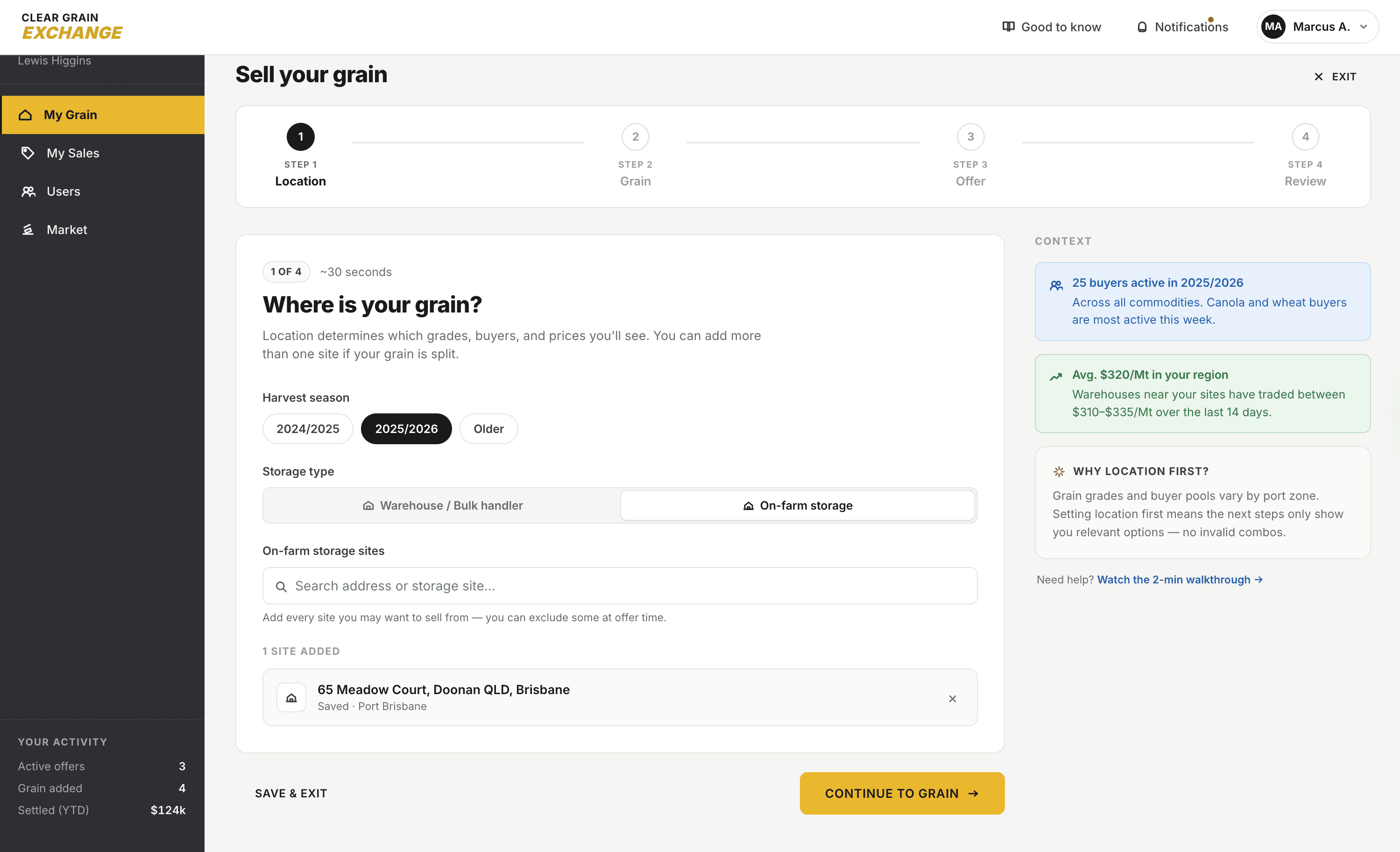
Pillar 3: Add Grain, rebuilt around location
Grain grade is hidden until a storage location is set, eliminating an entire category of invalid inputs.
Smart suggestions appear based on the user's location and past trades, with a Quick Add option for the most common grades. A three-step stepper (Add Grain, Offer Grain, Preview) shows progress.
Users who know what they're doing complete this in two clicks.
Before
The old Add Grain flow
- Blank form with no context or guidance
- Organisation, Season, Location, Grade shown simultaneously
- Grade input active before Location is set, allowing invalid states
- No price or market information on this screen
- Two confusing CTAs: 'Add Grain' and 'Create Offer'
- No smart suggestions based on user history
After
The redesigned Add Grain flow
- Clear headline explaining what this screen does and why
- Smart grain suggestions based on location and past trades
- Grain input hidden until location is confirmed
- Stepper shows progress: Add Grain, Offer Grain, Preview
- Quick Add option. Most users complete in two clicks
- Market insights shown contextually, such as 30+ active buyers for ANW2
Pillar 4: Create Offer, with market data inline
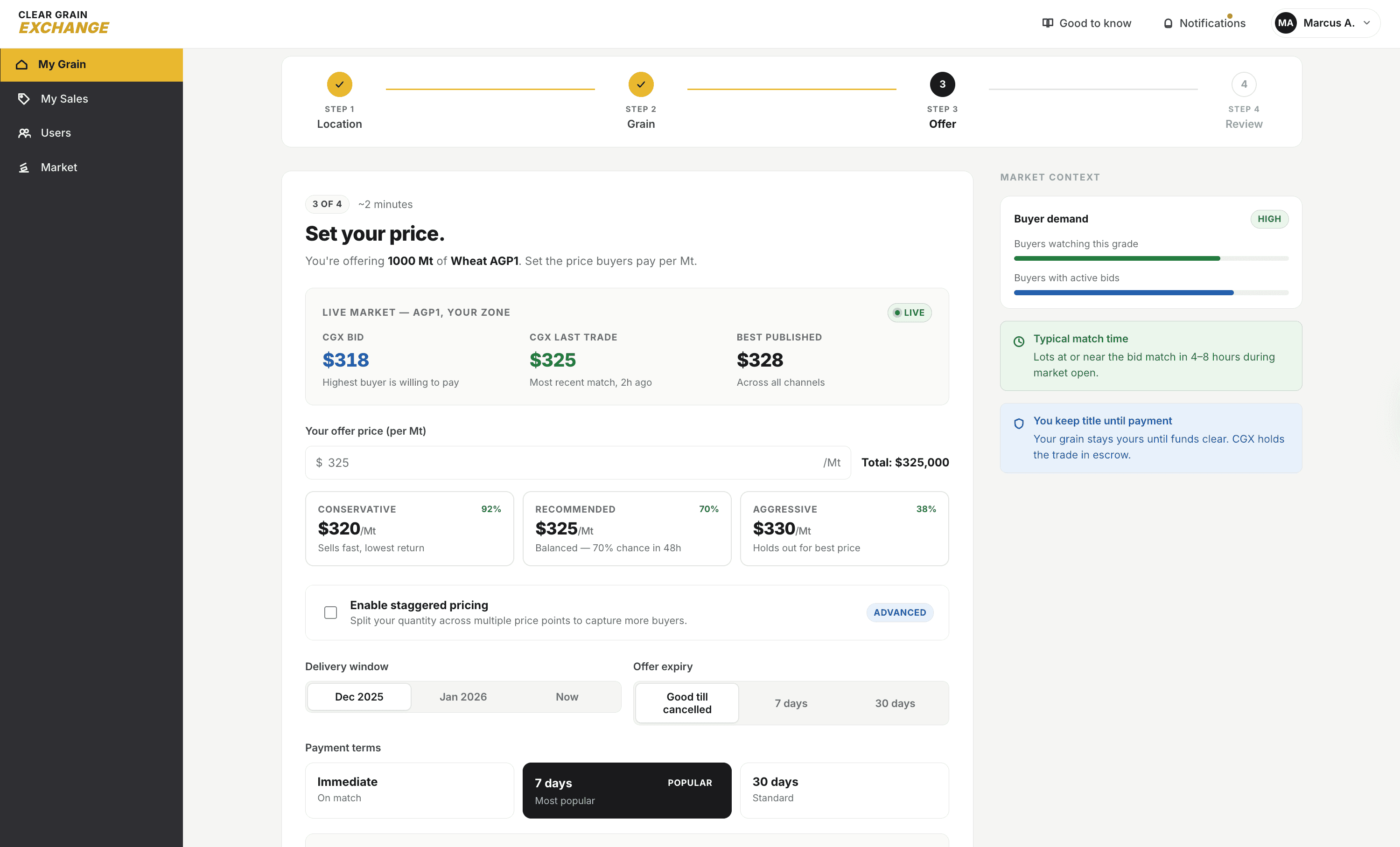
The price field shows CGX bid, CGX trade, and best published bid directly. A contextual selling tip appears based on the user's intent, for example, 'If you want to sell quickly, offer closer to the bid.'
A plain-language fee breakdown replaces the old jargon-heavy terms.
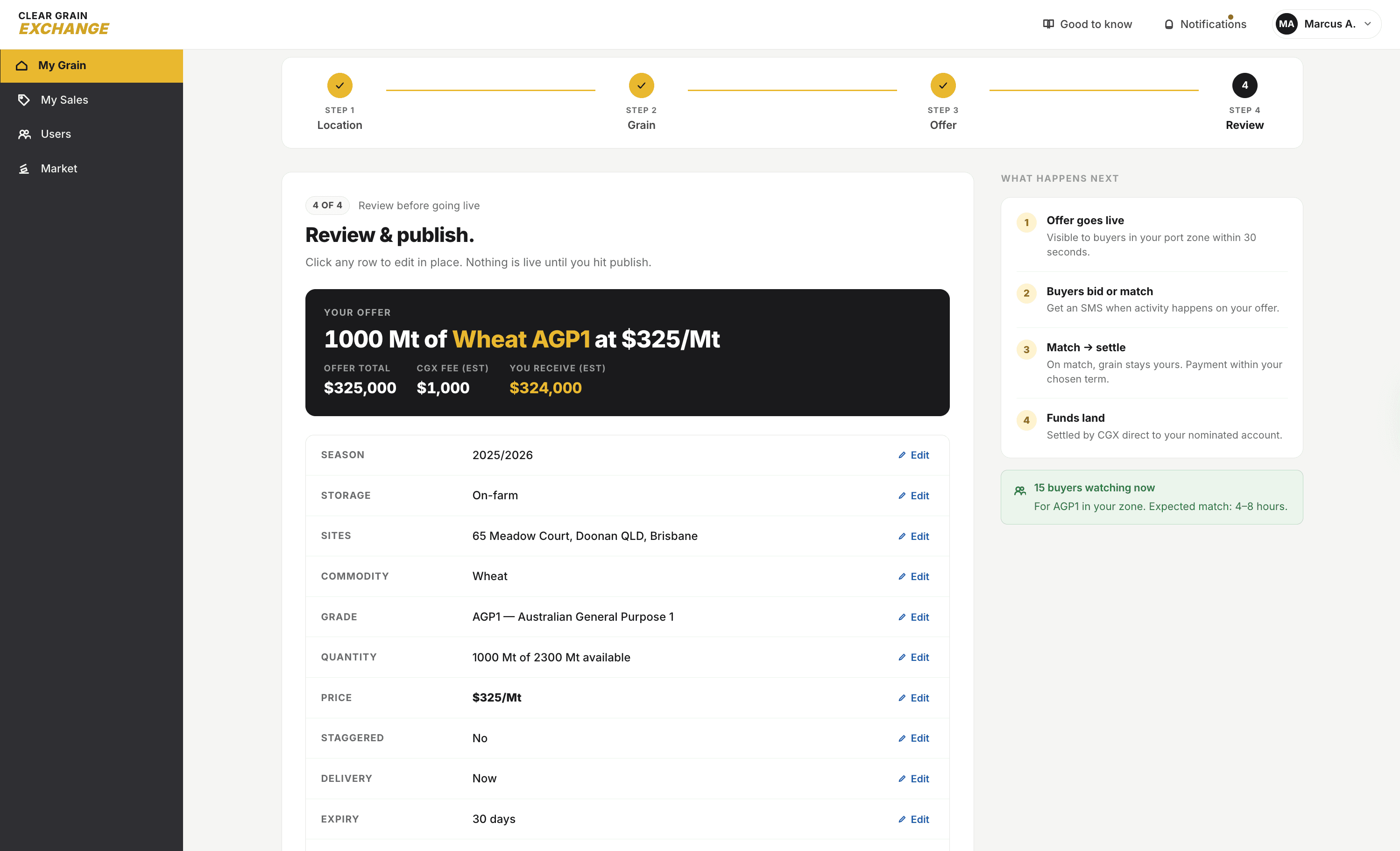
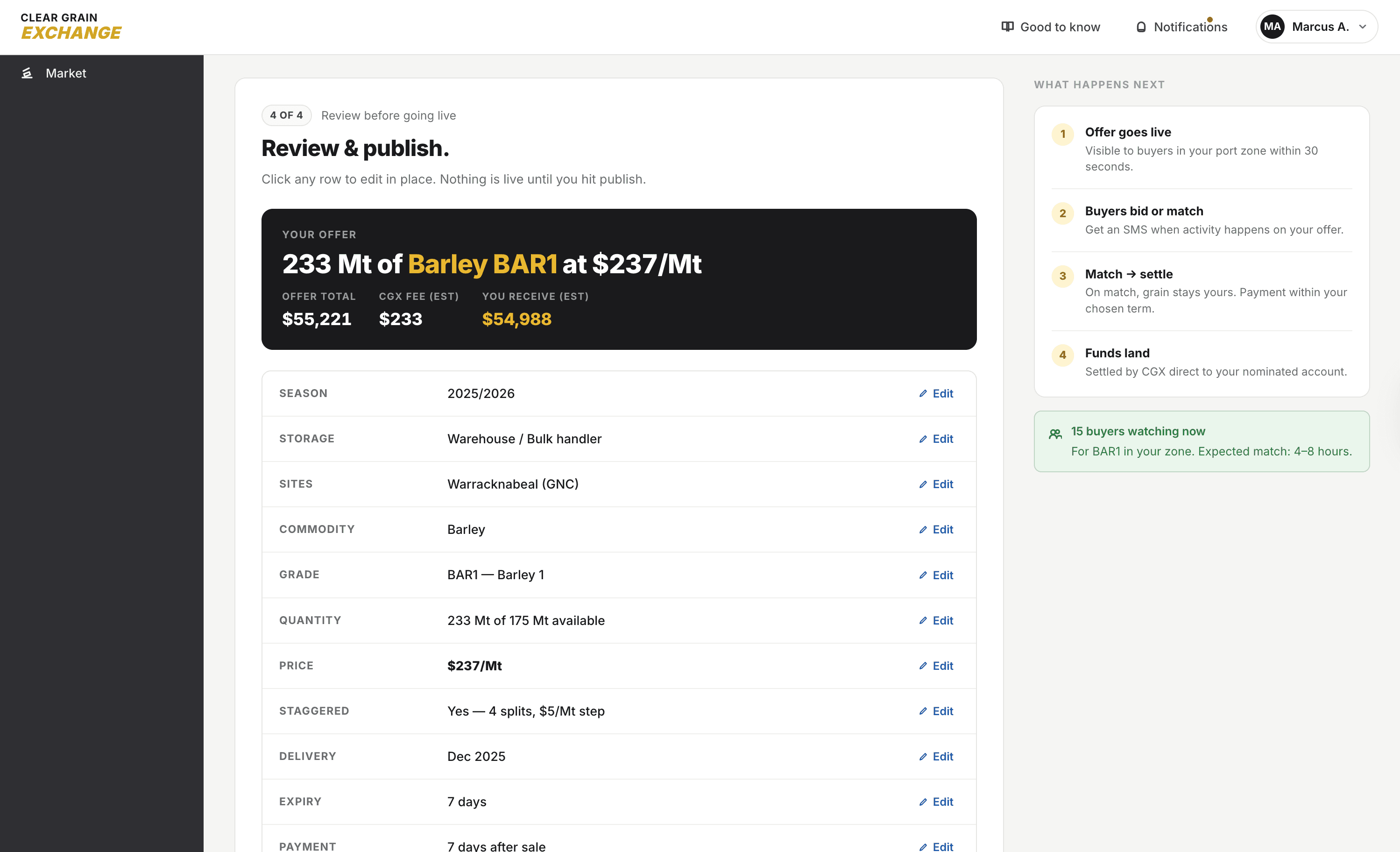
Preview supports inline editing, so users can adjust any field without going back through the whole flow.
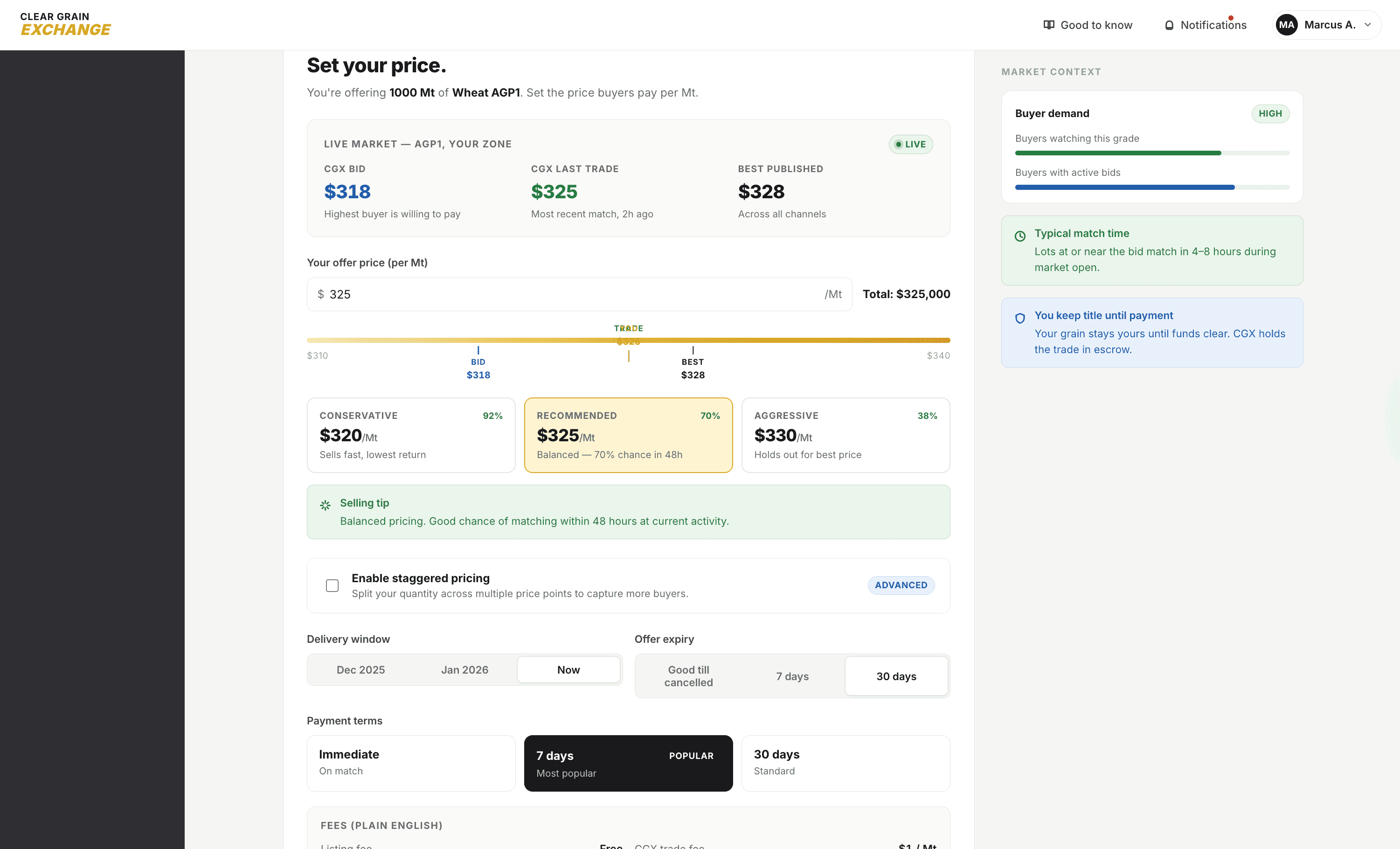
Before
The old Create Offer flow
- Raw form with no explanation of required information
- Price field with no market reference points
- Fee breakdown shown without context or plain language
- No help deciding the right price or delivery timing
- Preview required full back-navigation to edit any field
After
The redesigned Offer flow
- Summary bar shows grain details from the previous step
- Price field shows CGX bid, CGX trade, and best published bid
- Market insight: buyer count, price trend, demand signals
- Contextual selling tip for fast vs long-term strategies
- Fee breakdown with plain language labels
- Preview offers inline editing, no back-navigation needed
Pillar 5: The dashboard, rebuilt around action
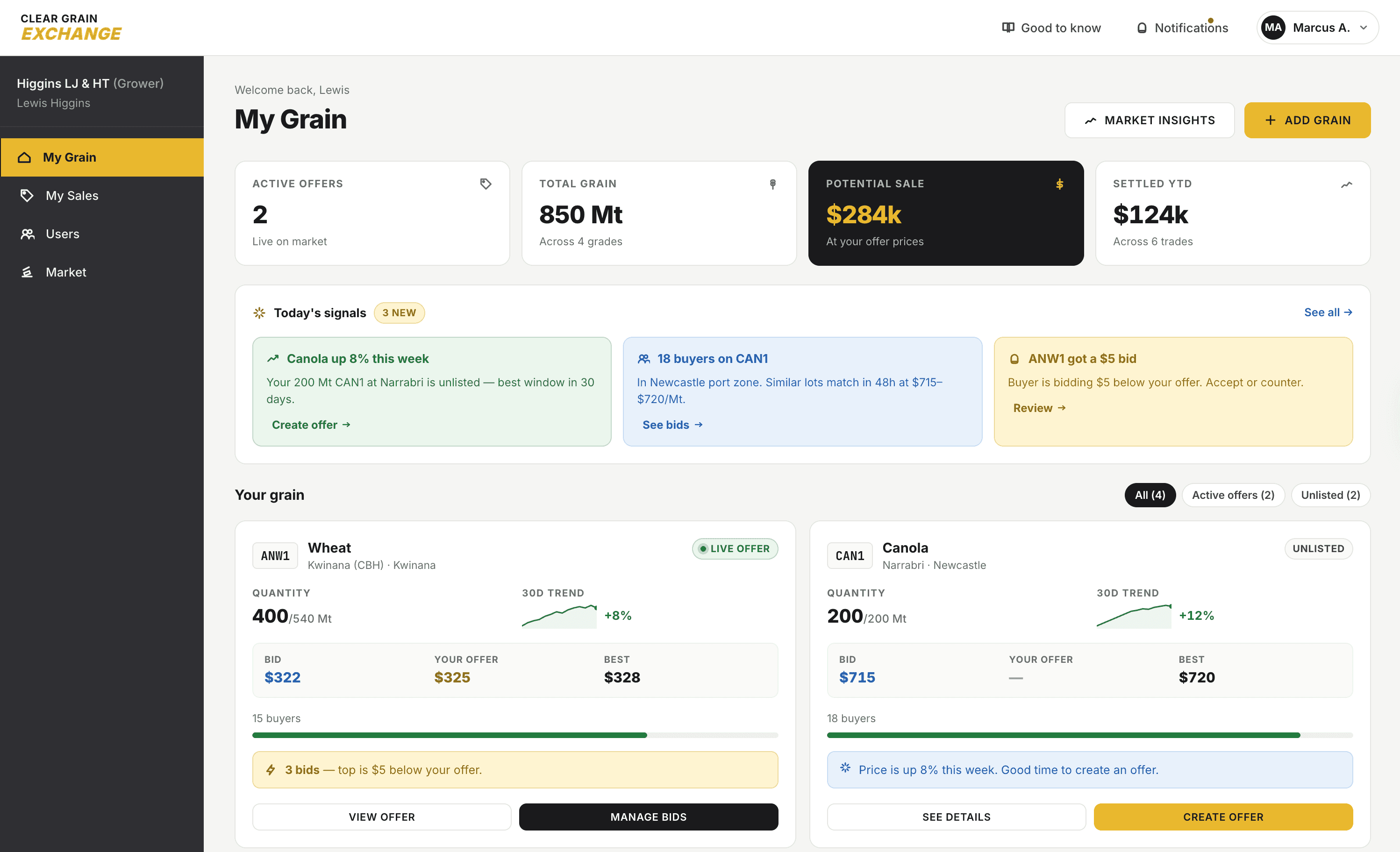
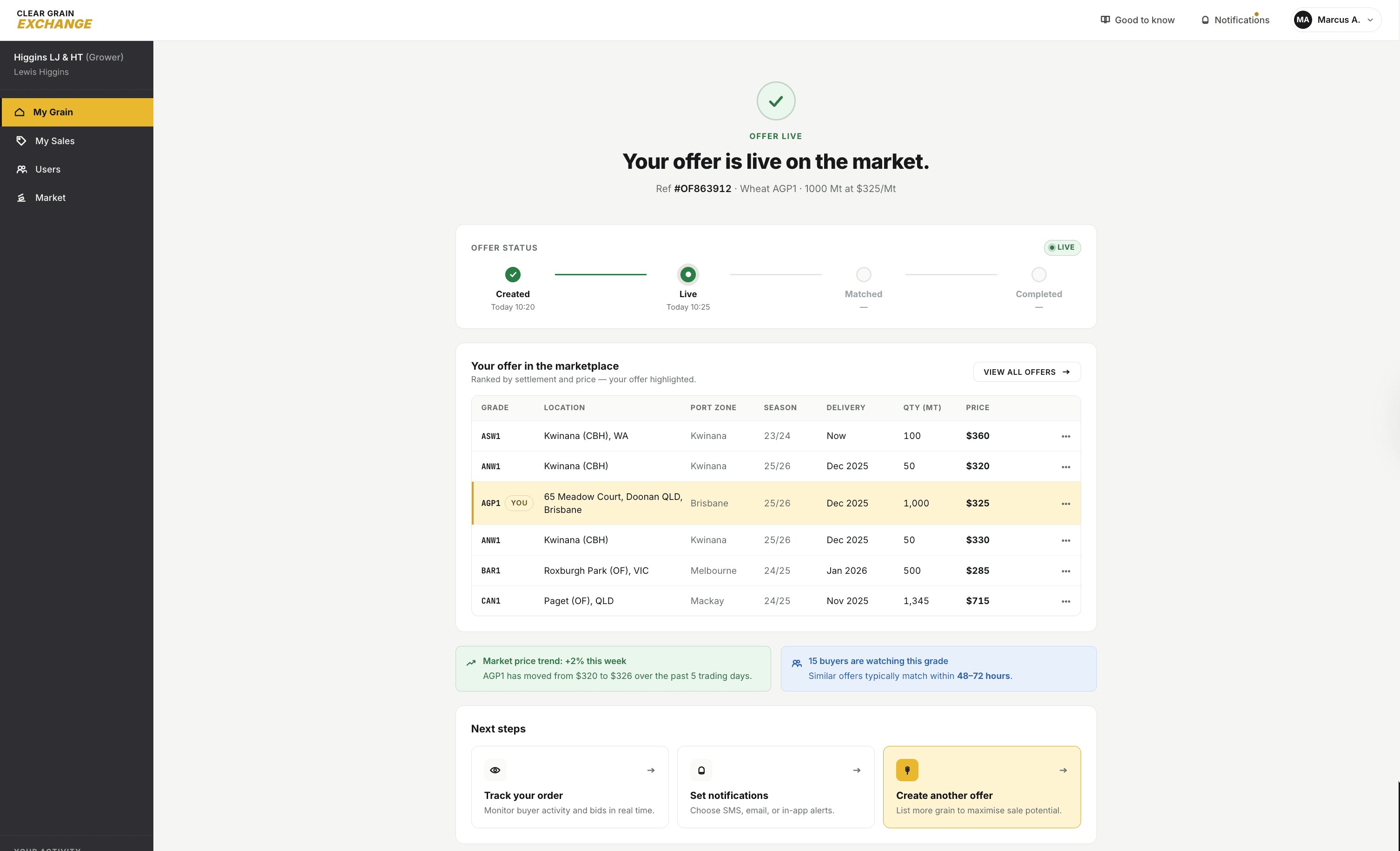
The old dashboard showed an undifferentiated list of grain with no context. The new dashboard shows three things at once.
Per-grain market intelligence inline: activity chart, lowest offer, bid price, demand signal. Active offer management with bid awareness, including indicators like 'five dollars above current bid.' Smart nudges for dormant grain, for example, 'ANW1 price is 8% up this week. Good time to create an offer.'
Measurable outcomes
+55%
increase in onboarding completion rate. More users reached the end of sign-up and created their first offer.
-35%
reduction in time to create and publish an offer. Smart prefill and inline guidance cut median flow time. Repeat offers saw closer to 65% reduction.
+40%
growth in grain listings volume in the first 2 months after launch. The primary business metric, directly linked to trade volume.
+60%
improvement in user satisfaction via post-onboarding NPS surveys. 45% of new users accessed the Educational Hub, averaging 7 minutes per session.
It's like someone is sitting next to me, telling me what to do.
Grower, post-launch qualitative interview
Context beats comprehensiveness. Farmers didn't need everything upfront. They needed the right help at the right moment. Passive, contextual guidance outperformed complex guided flows every time. The single most effective UX change was giving users information when they were ready to act, not before.
Simplicity builds trust. Every piece of trading jargon I removed was a friction point eliminated. 'Delivered Site Price' became 'Your price.' Trust followed clarity, especially for older users with limited digital experience.
Design for flexibility, not just flow. A rigid, sequential flow failed early tests. The successful version let users skip ahead, return, or pause to learn. The Educational Hub was initially scoped as a nice-to-have. It became one of the primary drivers of first-time listing confidence.
If I did this project again, I'd push harder for mobile-first design from day one. Many growers access the platform from the field, often in variable connectivity. The mobile experience worked but it wasn't what it could have been. That's the next phase.
[ FREQUENTLY ASKED ]